
Tunguska Event 1908
By Kåre Bergheim 18th of February 2026
Tunguska Event 1908
In these, they created large cavities in which they housed facilities for propulsion, for powerful onboard weapons, for external protective shields and electron collectors, along with energy storage, living quarters, workspaces, food production facilities, and life support systems, etc.—in short, everything that was necessary.
While the specific shape and external dimensions of this spacecraft remain unknown, we can estimate its scale by examining two key characteristics: a mass of 179,854 tonnes and a crew of over 4,300 extraterrestrial humans. To visualise these measurements, we can compare them to similar structures built on Earth.
Billy
Contact reports with Asket from the year 1953 to the year 1964
31st contact report, Thursday, July 17, 1975, 10:14 a.m.
86. Any incursion and further visits to Earth were prohibited, and a decree was even issued stating that if a ship should unexpectedly stray to Earth and find no way to leave, the entire crew would have to eliminate themselves along with the ship.
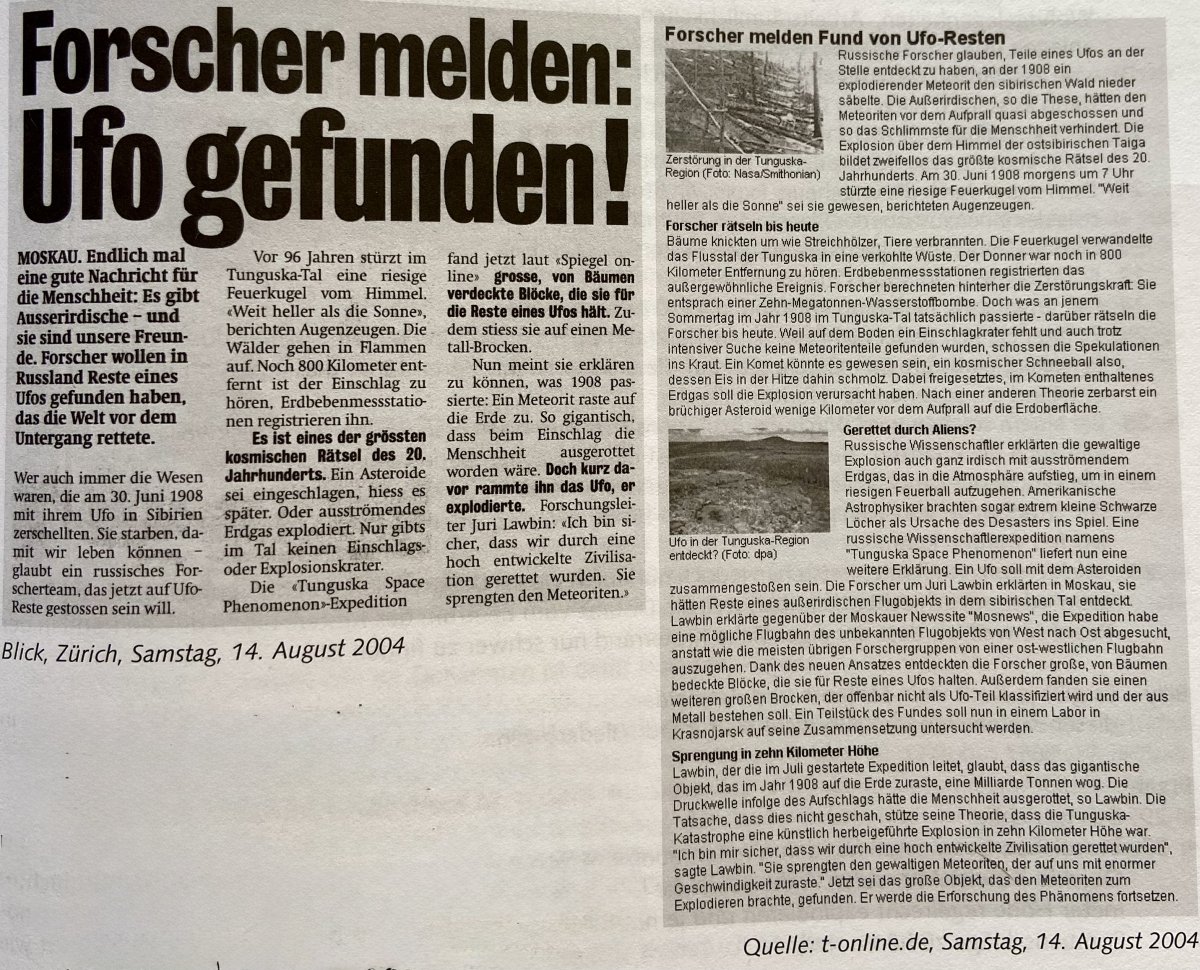
There have been some developments in this regard: Our passive member U. D. from Germany sent me a newspaper article by email that is very interesting in relation to the aforementioned matter.
Bernadette then found a similar article on the Internet and in the Blick newspaper on Saturday, August 14, 2004. It concerns these words by U.D. and these articles here, which I would like to read to you in their entirety and then hear your comments on them.
Hello,
These words from U.D. were followed by a longer report in a journal, which was similarly published in various newspapers and other journals. Similar news was also published by several other newspapers, but their content was identical
Ptaah
In this contact Ptaah give some interesting information about the Tunguska Event in 1908. So the extraterrestrials involved were called the people of Gilas and they were already very advanced in space technology and also capable of building enormous spacecraft by using small planetoids for this purpose.
In these, they created large cavities in which they housed facilities for propulsion, for powerful onboard weapons, for external protective shields and electron collectors, along with energy storage, living quarters, workspaces, food production facilities, and life support systems, etc.—in short, everything that was necessary.
While the specific shape and external dimensions of this spacecraft remain unknown, we can estimate its scale by examining two key characteristics: a mass of 179,854 tonnes and a crew of over 4,300 extraterrestrial humans. To visualise these measurements, we can compare them to similar structures built on Earth.
One such point of comparison is the world's largest cruise ship, the Icon of the Seas, which, according to USCG data, has a displacement of 114,291 metric tonnes. This is the vessel's weight. (Reference: Type 'Icon of the Seas' into the USCG search bar here: ).
To convert the internal volume of 248,663 Gross Tonnage (GT) to cubic metres, I used the conversion factor 1 GT equals 2.8318246 m3. I then scaled the result to match the Tunguska spaceship's mass of 179,854 metric tonnes, as specified by Ptaah in this contact.
Estimating the Scale of the 1908 Tunguska Spacecraft
1. The Earth Benchmark: Icon of the Seas
To establish a baseline, we look at the Icon of the Seas, the world's largest cruise ship::
2. Scaling the Spacecraft
By comparing the spacecraft's mass (179,854 mt) to the ship's displacement (114,291 mt), we find a mass ratio of 1.5737. Assuming the internal volume scales proportionally with mass, the spacecraft would have an estimated internal volume of 1,107,793 m³.
Using a linear scale-up factor of 1.16315 derived from this volume increase, we can project the dimensions of the spacecraft based on two potential shapes:
To establish a baseline, we look at the Icon of the Seas, the world's largest cruise ship::
- Displacement: 114,291 metric tonnes (65,563 tonnes lighter than the spacecraft).
- Capacity: 7,960 total people (5,610 passengers and 2,350 crew).
- Dimensions: 364.75m long by 48.47m wide.
- Internal Volume: 248,663 Gross Tonnage (GT), or approximately 704,170 m³.
2. Scaling the Spacecraft
By comparing the spacecraft's mass (179,854 mt) to the ship's displacement (114,291 mt), we find a mass ratio of 1.5737. Assuming the internal volume scales proportionally with mass, the spacecraft would have an estimated internal volume of 1,107,793 m³.
Using a linear scale-up factor of 1.16315 derived from this volume increase, we can project the dimensions of the spacecraft based on two potential shapes:
- Option A: Cigar-Shaped (Cylindrical)
If the craft follows a sleek, elongated design similar to a cruise ship, it would measure approximately 424.26 metres long and 56.38 metres wide. - Option B: Spherical
If the craft were a perfect sphere, the internal volume would result in a diameter of 128.38 metres.
The estimates for the outer dimensions of the spaceship from the M101 galaxy, which exploded over Tunguska in 1908, are based on the information provided to Billy Meier by Asket and Ptaah. These dimensions utilize a scaled-up version of the largest compareable moving structure on Earth: the cruise ship Icon of the Seas.
Icon of the Seas
Mass 114,291 mt
Internal Volume704,170 m³
Length 364.75 m with waterline beam 48.47m
If internal volume 704,170 m³ converted to a perfect sphere, diameter would be 110.38 m
Spacecraft (Est.)
Mass 179,854 mt
Internal Volume1,107,793 m³
Cigar-Shaped (Cylindrical): 424.26 m long 56.38 m wide
Spherical : Diameter if internal volume of 1,107,793 m³ converted to the shape of a sphere 128.38 m
With reference to: Plejadisch-plejarische Kontaktberichte, Gespräche, Block 9 (2007)
365th contact Friday, August 20, 2004, 12:00 a.m.
Pages 283 to 287
Part quote
My translation above the German original
Billy
Welcome and greetings, Ptaah, my friend, I am really very happy to see you.
Ptaah
1. Greetings to you too – the pleasure is all mine.
2. What kind of documents are those that you have lying on the table in front of you?
Billy
I can start right away, assuming you agree: In the new book Contact Conversations Volume 1, you can read in the 31st contact report on pages 311 and 312 how Asket spoke about the so-called Tunguska catastrophe. In this regard, I have copied the following from Block No. 1:
Contact reports with Asket from the year 1953 to the year 1964
Introduction and reasoning as well as precise reporting of all events and explanations, etc.
(Transcript of the original. Written In respective collaboration with Asket.)
Pleiadian-Plejaren contact reports, conversations, Block 1, page 295
Asket's statements
(Written down on September 1, 1964, in Mahrauli/India. Word-for-word transcript by by Asket with the help of her technical devices, which enable these verbatim reproductions from her subconscious. The following statement was given by Asket on February 3, 1953, while we were in her ship in the Jordanian desert mountains.)
Asket's statements
(Written down on September 1, 1964, in Mahrauli/India. Word-for-word transcript by by Asket with the help of her technical devices, which enable these verbatim reproductions from her subconscious. The following statement was given by Asket on February 3, 1953, while we were in her ship in the Jordanian desert mountains.)
31st contact report, Thursday, July 17, 1975, 10:14 a.m.
Pages 311 and 312, sentences 86 to 95.
86. Any incursion and further visits to Earth were prohibited, and a decree was even issued stating that if a ship should unexpectedly stray to Earth and find no way to leave, the entire crew would have to eliminate themselves along with the ship.
87. And that is what actually happened around 1000 years after this decree was issued, when a large spacecraft still located in terrestrial space was no longer able to free itself from Earth, where it had laid hidden for several months with severe technical damage in the land that you call Russia
88. The ship was only able to work its way up a few hundred metres and then sank down again.
89. In accordance with the rule that no spaceships, etc., were allowed to approach Earth, it was impossible to provide any assistance.
90. On the other hand, other races from outer space stationed on Earth were prohibited from helping the damaged ship because an Earth epidemic had broken out among the crew, which was very dangerous for these life forms.
91. Knowing that no help was coming, they constructed a powerful bomb from the building blocks of life, which you call atoms, forced the ship as high as possible into the sky, and then simply let it crash down.
92. It fell to Earth like a colossal comet, and before it hit the ground, the atomic bomb was detonated a few hundred meters above the surface.
93. A massive explosion tore the ship and the crew apart, turning everything to dust and destroying the landscape.
93. A massive explosion tore the ship and the crew apart, turning everything to dust and destroying the landscape.
94. All that remained was a gigantic crater, mistakenly referred to as a meteor crater by your scientists.
95. More than 4,300 life forms of extraterrestrial origin were annihilated in this gigantic destruction, which can only be attributed to the earthly cult of Christ, for the real reason for this destruction was the madness of this earthly religion.
95. More than 4,300 life forms of extraterrestrial origin were annihilated in this gigantic destruction, which can only be attributed to the earthly cult of Christ, for the real reason for this destruction was the madness of this earthly religion.
There have been some developments in this regard: Our passive member U. D. from Germany sent me a newspaper article by email that is very interesting in relation to the aforementioned matter.
Bernadette then found a similar article on the Internet and in the Blick newspaper on Saturday, August 14, 2004. It concerns these words by U.D. and these articles here, which I would like to read to you in their entirety and then hear your comments on them.
Hello,
This is already mentioned in the contact reports.
Yet another piece of evidence.
Salome U.D./Germany
Tunguska catastrophe:
Researchers report discovery of UFO remains Russian researchers believe they have discovered parts of a UFO at the site where an exploding meteorite flattened the Siberian forest in 1908. The theory is that the extraterrestrials shot down the meteorite before it hit the ground, thus preventing the worst for humanity.
New evidence: Fragile asteroid devastated Tunguska
These words from U.D. were followed by a longer report in a journal, which was similarly published in various newspapers and other journals. Similar news was also published by several other newspapers, but their content was identical
Ptaah
3. Are these the articles here?
Billy
Yes, that's correct. But before I read them to you, I would like to ask you to comment on them afterwards.
Ptaah
4. What do you mean by that?
Billy
My wish is for you to explain what kind of spaceship the flying craft was, because it was, after all, something unusual.
Ptaah
5. That can certainly be said in that way.
Billy
Then, are you willing to explain it?
Ptaah
6. Yes, because it is not a secret matter
Billy
Exactly. It would certainly be good to mention a few details.
Ptaah
7. I assume that you have toyed with this idea.
Billy
Nothing remains hidden from you either.
Ptaah
Ptaah
8. We both know each other very well - even though you keep surprising me with things about you that are unknown to me.
9. You are very good at keeping your secrets.
10. We have also experienced that in you for many years.
Billy
Billy
It's not that bad, really. But now I want to read these two articles to you.
The first one here is from the Blick newspaper from August 14, as I already mentioned.
The second one comes from the internet, from T-Online. So, listen:
What do you say to that?
21. It is very likely that, as a result of the enormous explosion, fragments of the outer thick planetoid shell and metal parts of the interior construction of the planetoid spaceship were hurled towards Earth.
23. It covered an area of around 3,500 square kilometers.
24. The enormous explosion occurred at an altitude of 1,290 meters.
It's interesting that people are finally coming forward and talking about things other than what some scientists have claimed up to now, namely that the Tunguska catastrophe was caused by gas escaping from the earth and exploding, etc. .
Ptaah
11. The articles are very interesting, but they do not correspond to the reality of the events at that time.
12. It is true, as you know, that the events were caused by a spacecraft belonging to extraterrestrial intelligences, and precisely according to Asket's description, as you read to me from Asket's statements from sentence 86 to 95.
13. The crew of the large spacecraft, which was destroyed over the Tunguska region on June 30, 1908, came from the Setkatis galaxy, about 17 million light-years away, a large spiral galaxy also known to Earth astronomers, namely under the designation M 101. (We use the name Pinwheel Galaxy)
14. The home of the spacefarers was a planet slightly larger than Earth called Ketulas, a satellite of the Bliira solar system, which has two suns and 18 planets, of which, however, only 3 of them support human life.
15. From Earth, the galaxy can be observed so to speak from above, although the Bliira solar system remains invisible from Earth because it lies beyond the range of observation.
16. The crew members of the spacecraft belonged to the Gilas people, which is why we call them Gilasers.
17. At that time, the people of Gilas were already very advanced in space technology and also capable of building enormous spacecraft by using small planetoids for this purpose.
18. In these, they created large cavities in which they housed facilities for propulsion, for powerful onboard weapons, for external protective shields and electron collectors, along with energy storage, living quarters, workspaces, food production facilities, and life support systems, etc.—in short, everything that was necessary.
19. From the outside, it was not recognizable that it was a spacecraft or a spaceship, because outwardly the object remained what it essentially was, namely a small planetoid.
20. Its enormous weight was calculated to be around 179,854 tons, therefore, what you read from the T-Online article is far from the truth.
21. It is very likely that, as a result of the enormous explosion, fragments of the outer thick planetoid shell and metal parts of the interior construction of the planetoid spaceship were hurled towards Earth.
22. And there is another thing worth mentioning about the enormous crater and that is:
23. It covered an area of around 3,500 square kilometers.
24. The enormous explosion occurred at an altitude of 1,290 meters.
25. It is not a deep crater or impact crater, such as those caused by a large projectile striking the earth directly, because the explosion at high altitude created what is known as a horizontal crater.
26. In such an event, the explosive force from above, or rather the blast wave, flattens all the soil, as well as plants, animals, and at least the weaker trees.
27. The force of the blast wave forms only a small rim at the outermost edge of the crater, which, depending on the energy of the blast wave, can be uplifted anywhere from a few centimetres to heights of twenty or even thirty meters or more.
28. However, such horizontal craters are only created by massive downward blast waves and are generally unrecognisable or difficult to identify. This is because the distance from the centre of the crater to its edge is typically so great that the actual crater rim is hard to locate.
Billy
There are also many meteors and asteroids that enter the Earth's atmosphere and explode high up in it, and thus do not fall all the way down to the ground
Ptaah
Ptaah
29. That is correct.
30. Such projectiles from outer space are fragile objects, some up to several meters in size—mostly asteroids—which literally explode due to friction in the outer atmosphere at an altitude of approximately 40 to 60 kilometers and, depending on their size, cause powerful detonations that often sound like bomb blasts.
31. This also applies to small objects of the same type, whereby the explosion sounds like a balloon bursting or a champagne cork popping, which is particularly noticeable at night when all is quiet.
31. This also applies to small objects of the same type, whereby the explosion sounds like a balloon bursting or a champagne cork popping, which is particularly noticeable at night when all is quiet.
32. It sounds similar to when small electrical charges several kilometers above the ground tear through the air with a faint bang.
33. We call these events atmospheric explosions, while we refer to the powerful detonations at high altitudes as meteor explosions or asteroid explosions.
Billy
Thanks. Your explanation tells me everything I wanted to know.
Above:
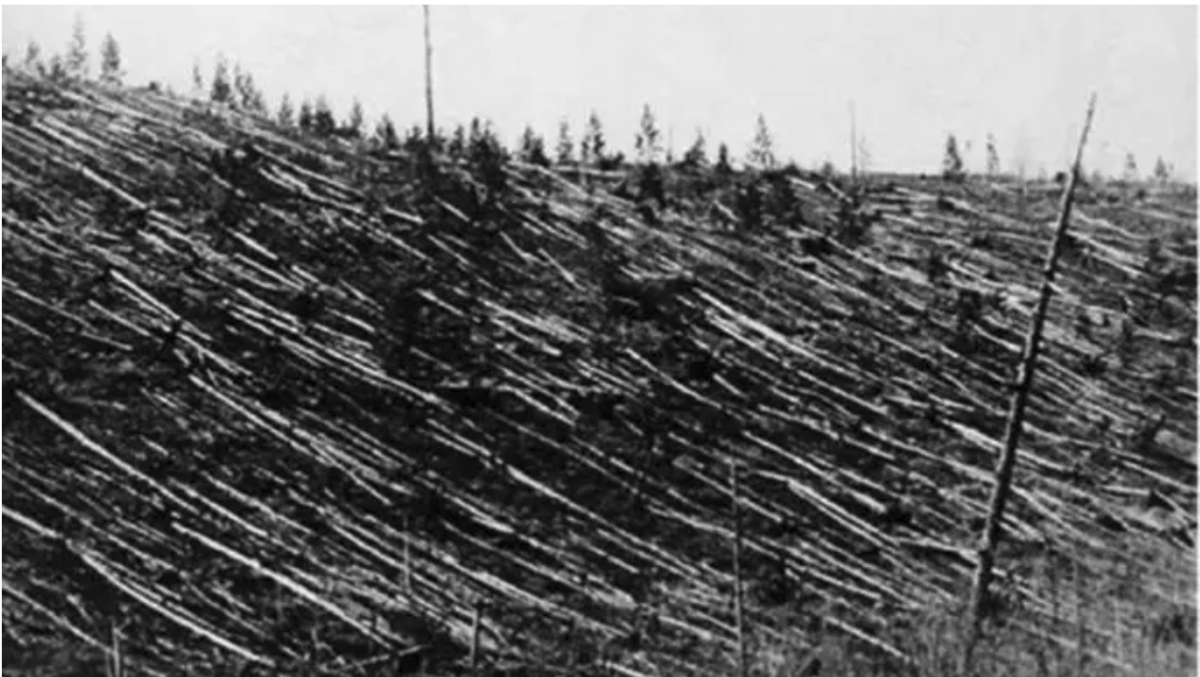
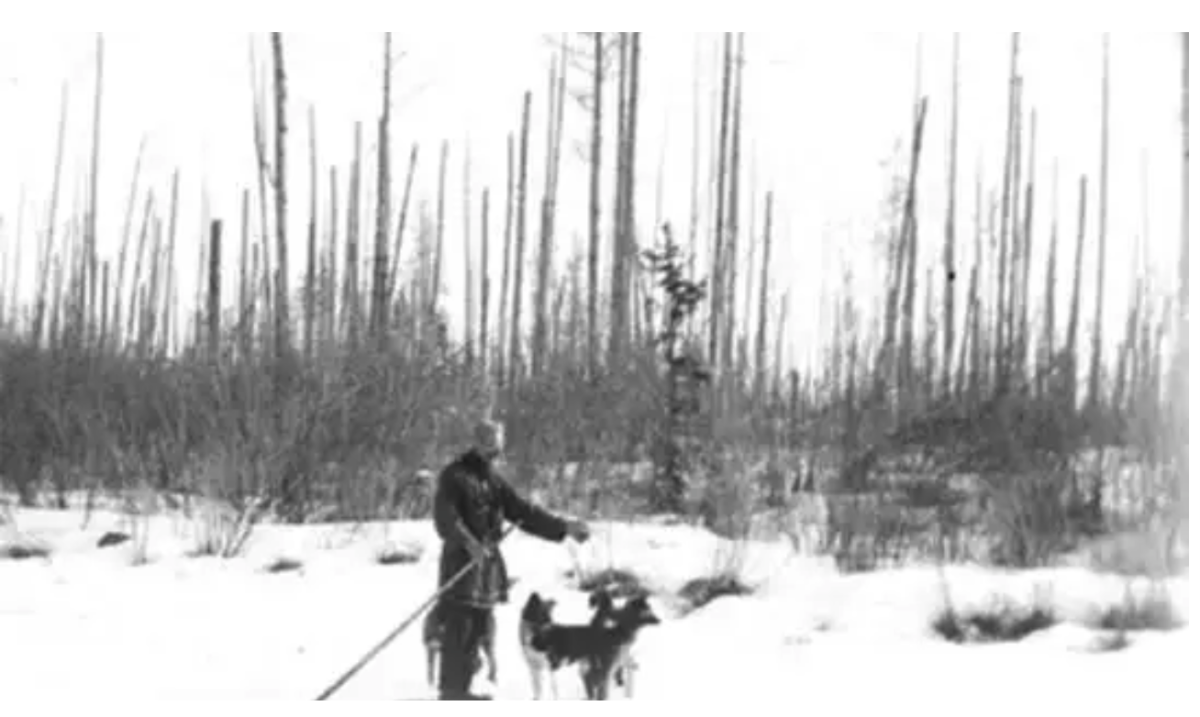
Captured during a landmark 1920s scientific expedition led by Soviet mineralogist Leonid Kulik, these photographs documents the radial destruction caused by the Tunguska air blast. Nearly two decades after the 1908 event, the image reveals millions of trees leveled by a massive shockwave, with those at the epicenter left standing like "telegraph poles"—stripped of branches and bark but still rooted
Images: Courtesy Lenid Kulik / NASA
Images: Courtesy Lenid Kulik / NASA
German original:
Unter bezugnahme auf: Plejadisch-plejarische Kontaktberichte, Gespräche, Block 9 (2007)
Dreihundertfünfundsechzigster Kontakt Freitag, 20. August 2004, 00.12 Uhr
Seite 283 biz 287
Teil Zitat
Billy
Sei willkommen und gegrüsst, Ptaah, mein Freund, es freut mich wirklich sehr, dich zu sehen.
Dreihundertfünfundsechzigster Kontakt Freitag, 20. August 2004, 00.12 Uhr
Seite 283 biz 287
Teil Zitat
Billy
Sei willkommen und gegrüsst, Ptaah, mein Freund, es freut mich wirklich sehr, dich zu sehen.
Ptaah
1. Sei auch du gegrüsst - und die Freude ist auch meinerseits.
2. Welcher Art sind denn diese Unterlagen, die du da vor dir auf dem Tisch liegen hast?
Billy
Da kann ich ja gleich damit beginnen, wozu ich deine Zustimmung voraussetze: Im neuen in Buchform erschienenen Kontaktgespräche-Band Nr. 1 ist im 31. Kontaktbericht auf den Seiten 311 und 312 nachzulesen, wie Asket über die sogenannte Tunguska-Katastrophe gesprochen hat. Diesbezüglich habe ich folgendes aus dem Block Nr. 1 herauskopiert:
Kontaktberichte mit Asket vom Jahre 1953 bis zum Jahre 1964
1. Sei auch du gegrüsst - und die Freude ist auch meinerseits.
2. Welcher Art sind denn diese Unterlagen, die du da vor dir auf dem Tisch liegen hast?
Billy
Da kann ich ja gleich damit beginnen, wozu ich deine Zustimmung voraussetze: Im neuen in Buchform erschienenen Kontaktgespräche-Band Nr. 1 ist im 31. Kontaktbericht auf den Seiten 311 und 312 nachzulesen, wie Asket über die sogenannte Tunguska-Katastrophe gesprochen hat. Diesbezüglich habe ich folgendes aus dem Block Nr. 1 herauskopiert:
Kontaktberichte mit Asket vom Jahre 1953 bis zum Jahre 1964
Einführung und Begründung sowie genaue Berichterstattung aller Geschehnisse und Erklärungen usw.
(Abschrift vom Original. Geschrieben in jeweiliger Zusammenarbeit mit Asket.)
Plejadisch-plejarische Kontaktberichte, Gespräche, Block 1, Seite 295
Askets Erklärungen
(Niedergeschrieben am 1. September 1964 in Mahrauli/India. Wörtliche Wiedergaben durch Asket mit Hilfe ihrer Apparaturen, die diese wörtlichen Wiedergaben aus ihrem Unterbewusstsein ermöglichen. Folgende Erklärung wurde am 3. Februar 1953 von Asket abgegeben, während wir uns in ihrem Schiff im jordanischen Wüstengebirge aufhielten.)
31. Kontaktbericht, Donnerstag, 17. Juli 1975, 10.14 h
(Abschrift vom Original. Geschrieben in jeweiliger Zusammenarbeit mit Asket.)
Plejadisch-plejarische Kontaktberichte, Gespräche, Block 1, Seite 295
Askets Erklärungen
(Niedergeschrieben am 1. September 1964 in Mahrauli/India. Wörtliche Wiedergaben durch Asket mit Hilfe ihrer Apparaturen, die diese wörtlichen Wiedergaben aus ihrem Unterbewusstsein ermöglichen. Folgende Erklärung wurde am 3. Februar 1953 von Asket abgegeben, während wir uns in ihrem Schiff im jordanischen Wüstengebirge aufhielten.)
31. Kontaktbericht, Donnerstag, 17. Juli 1975, 10.14 h
Seiten 311 und 312, Sätze 86. bis 95.
86. Jeglicher Vorstoss und jeglicher weitere Besuch der Erde wurden verboten, und es wurde gar die Bestimmung erlassen, dass wenn sich einmal unverhofft ein Schiff auf die Erde verirren sollte, und keine Fortkommensmöglichkeit mehr finden sollte, sich die ganze Besatzung mit dem Schiff zusammen total zu eliminieren habe.
87. Dies geschah dann auch tatsächlich rund 1000 Jahre nach Erlass dieser Bestimmung, als ein noch im irdischen Raume befindliches Grossraumschiff sich nicht mehr von der Erde zu befreien vermochte, wo es während mehreren Monaten mit schweren technischen Schäden in dem Lande versteckt gelegen hatte, das ihr Russland nennt.
88. Das Schiff vermochte sich nur noch wenige hundert Meter hochzuarbeiten und sank dann wieder ab.
89. Der Bestimmung gemäss, dass sich keine Raumschiffe usw. der Erde mehr nähern durften, war so auch jede Hilfeleistung unmöglich.
90. Auf der Erde stationierten anderweitigen Rassen aus dem Weltenraum wurde andererseits untersagt, dem havarierten Schiff Hilfe zu bringen, weil unter der Besatzung eine irdische Seuche ausgebrochen war, die für diese Lebensformen sehr gefährlich war.
88. Das Schiff vermochte sich nur noch wenige hundert Meter hochzuarbeiten und sank dann wieder ab.
89. Der Bestimmung gemäss, dass sich keine Raumschiffe usw. der Erde mehr nähern durften, war so auch jede Hilfeleistung unmöglich.
90. Auf der Erde stationierten anderweitigen Rassen aus dem Weltenraum wurde andererseits untersagt, dem havarierten Schiff Hilfe zu bringen, weil unter der Besatzung eine irdische Seuche ausgebrochen war, die für diese Lebensformen sehr gefährlich war.
91. Im Wissen, dass ihrer keinerlei Hilfe mehr harrte, konstruierten sie eine gewaltige Bombe aus Grundsteinen des Lebens, die ihr Atom nennt, zwangen das Schiff soweit wie möglich in den Himmel hinauf und liessen es dann einfach abstürzen.
92. Wie ein gewaltiger Komet stürzte es zur Erde nieder, und ehe es auf die Erde aufprallte, wurde in wenigen hundert Metern Höhe die Atombombe gezündet.
93. Eine gewaltige Explosion zerriss das Schiff und die Besatzung, verwandelte alles in Staub und zerstörte die Landschaft.
94. Von allem blieb nur ein riesenhafter Krater zurück, der irrtümlich von euren Wissenschaftlern als Meteorkrater bezeichnet wird.
95. Mehr als 4300 Lebensformen ausserirdischen Ursprungs wurden bei dieser gigantischen Zerstörung vernichtet, die nur zurückzuführen ist auf den irdischen Christuskult, denn der eigentliche Grund dieser Zerstörung war der Wahnsinn dieser irdischen Religion.
Dazu hat sich nun einiges ergeben: Unser Passiv-Mitglied U. D. aus Deutschland hat mir per E-Mail einen Zeitungsartikel zukommen lassen, der in der vorgenannten Sache sehr interessant ist.
Einen gleichartigen Artikel hat dann Bernadette auch im Internet und in der Blick-Zeitung vom Samstag, den 14. August 2004 gefunden. Es handelt sich um diese Worte von Uwe Dworschak und um diese Artikel hier, die ich dir gesamthaft vorlesen will, um dann deinen Kommentar dazu zu hören.
Hallo,
das steht ja schon in den Kontaktberichten. Wieder ein weiterer Beweis.
Salome U.D./Deutschland
Tunguska-Katastrophe: Forscher melden Fund von Ufo-Resten Russische Forscher glauben, Teile eines Ufos an der Stelle entdeckt zu haben, an der 1908 ein explodierender Meteorit den sibirischen Wald niedersäbelte. Die Ausserirdischen, so die These, hätten den Meteoriten vor dem Aufprall quasi abgeschossen und so das Schlimmste für die Menschheit verhindert.
Neue Hinweise: Brüchiger Asteroid verwüstete Tunguska
Diesen Worten von U.D. folgte ein längerer Bericht eines Journals, der in ähnlicher Weise auch in diversen Zeitungen und anderen Journalen veröffentlicht wurde. Auch wurden von verschiedenen weiteren Zeitungen ähnliche Nachrichten veröffentlicht, die sich jedoch inhaltlich deckten.
Ptaah
3. Das sind diese Artikel hier?
Billy
Ja, das ist richtig. Doch ehe ich sie dir vorlese, möchte ich dich bitten, danach dazu Stellung zu nehmen.
Ptaah
4. Wie meinst du das?
Billy
Mein Wunsch geht dahin, dass du erklärst, um welche Art Raumschiff es sich bei dem Fluggerät gehandelt hat, weil es sich ja um etwas Unübliches handelte.
Ptaah 5.
Das kann wohl so gesagt werden.
Billy
Dann bist du gewillt, es zu erklären?
Ptaah 6.
Ja, denn es handelt sich nicht um eine Geheimsache.
Billy
Eben. Einige Einzelheiten wären sicherlich auch gut zu nennen.
Ptaah
7. Davon gehe ich aus, dass du mit diesem Gedanken gespielt hast.
Billy
Dir bleibt auch gar nichts verborgen.
Ptaah
8. Wir beide kennen uns gegenseitig sehr gut - auch wenn du mich immer wieder mit Dingen überraschst, die mir an dir unbekannt sind.
9. Du verstehst es sehr gut, deine Geheimnisse zu wahren.
10. Das haben wir ja auch jahrelang an dir erlebt.
Billy
So schlimm ist es auch wieder nicht. Jetzt aber will ich dir diese beiden Artikel vorlesen. Der erste hier ist von der Blick-Zeitung vom 14. August, wie ich schon sagte. Der zweite hier stammt aus dem Internet von T-Online. So höre denn:
Was sagst du nun dazu? Es ist doch interessant, dass nun doch endlich mal Leute kommen und von anderen Dingen reden, als das bisher der Fall war durch manche Wissenschaftler, die behaupteten, dass die Tunguska-Katastrophe durch aus der Erde ausströmendes und explodierendes Gas usw. entstanden sei.
Ptaah
11. Die Artikel sind sehr interessant, doch entsprechen sie nicht der Wirklichkeit des damaligen Geschehens.
12. Zwar stimmt es, wie du weisst, dass das Geschehen durch ein Raumfluggerät erdfremder Intelligenzen hervorgerufen wurde, und zwar genau gemäss Askets Beschreibung, wie du sie mir mit dem 86. bis zum 95. Satz aus Askets Erklärungen vorgelesen hast.
13. Die Besatzung des grossen Raumfluggerätes, das über dem Tunguska-Gebiet anno 1908 am 30. Juni zerstört wurde, kam aus der rund 17 Millionen Lichtjahre entfernten Setkatis-Galaxie, eine grosse Spiralgalaxie, die auch den irdischen Astronomen bekannt ist, und zwar unter der Bezeichnung M 101.
14. Die Heimat der Raumfahrer war ein Planet von wenig mehr als Erdgrösse und wird Ketulas genannt und ist ein Trabant des Sonnensystems Bliira, das zwei Sonnen und 18 Planeten umfasst, von denen jedoch nur deren 3 menschliches Leben tragen.
15. Von der Erde aus ist die Galaxie sozusagen von oben zu beobachten, wobei jedoch das Bliira-Sonnensystem von der Erde aus unsichtbar bleibt, weil es sich jenseits der Beobachtungsmöglichkeit befindet.
92. Wie ein gewaltiger Komet stürzte es zur Erde nieder, und ehe es auf die Erde aufprallte, wurde in wenigen hundert Metern Höhe die Atombombe gezündet.
93. Eine gewaltige Explosion zerriss das Schiff und die Besatzung, verwandelte alles in Staub und zerstörte die Landschaft.
94. Von allem blieb nur ein riesenhafter Krater zurück, der irrtümlich von euren Wissenschaftlern als Meteorkrater bezeichnet wird.
95. Mehr als 4300 Lebensformen ausserirdischen Ursprungs wurden bei dieser gigantischen Zerstörung vernichtet, die nur zurückzuführen ist auf den irdischen Christuskult, denn der eigentliche Grund dieser Zerstörung war der Wahnsinn dieser irdischen Religion.
Dazu hat sich nun einiges ergeben: Unser Passiv-Mitglied U. D. aus Deutschland hat mir per E-Mail einen Zeitungsartikel zukommen lassen, der in der vorgenannten Sache sehr interessant ist.
Einen gleichartigen Artikel hat dann Bernadette auch im Internet und in der Blick-Zeitung vom Samstag, den 14. August 2004 gefunden. Es handelt sich um diese Worte von Uwe Dworschak und um diese Artikel hier, die ich dir gesamthaft vorlesen will, um dann deinen Kommentar dazu zu hören.
Hallo,
das steht ja schon in den Kontaktberichten. Wieder ein weiterer Beweis.
Salome U.D./Deutschland
Tunguska-Katastrophe: Forscher melden Fund von Ufo-Resten Russische Forscher glauben, Teile eines Ufos an der Stelle entdeckt zu haben, an der 1908 ein explodierender Meteorit den sibirischen Wald niedersäbelte. Die Ausserirdischen, so die These, hätten den Meteoriten vor dem Aufprall quasi abgeschossen und so das Schlimmste für die Menschheit verhindert.
Neue Hinweise: Brüchiger Asteroid verwüstete Tunguska
Diesen Worten von U.D. folgte ein längerer Bericht eines Journals, der in ähnlicher Weise auch in diversen Zeitungen und anderen Journalen veröffentlicht wurde. Auch wurden von verschiedenen weiteren Zeitungen ähnliche Nachrichten veröffentlicht, die sich jedoch inhaltlich deckten.
Ptaah
3. Das sind diese Artikel hier?
Billy
Ja, das ist richtig. Doch ehe ich sie dir vorlese, möchte ich dich bitten, danach dazu Stellung zu nehmen.
Ptaah
4. Wie meinst du das?
Billy
Mein Wunsch geht dahin, dass du erklärst, um welche Art Raumschiff es sich bei dem Fluggerät gehandelt hat, weil es sich ja um etwas Unübliches handelte.
Ptaah 5.
Das kann wohl so gesagt werden.
Billy
Dann bist du gewillt, es zu erklären?
Ptaah 6.
Ja, denn es handelt sich nicht um eine Geheimsache.
Billy
Eben. Einige Einzelheiten wären sicherlich auch gut zu nennen.
Ptaah
7. Davon gehe ich aus, dass du mit diesem Gedanken gespielt hast.
Billy
Dir bleibt auch gar nichts verborgen.
Ptaah
8. Wir beide kennen uns gegenseitig sehr gut - auch wenn du mich immer wieder mit Dingen überraschst, die mir an dir unbekannt sind.
9. Du verstehst es sehr gut, deine Geheimnisse zu wahren.
10. Das haben wir ja auch jahrelang an dir erlebt.
Billy
So schlimm ist es auch wieder nicht. Jetzt aber will ich dir diese beiden Artikel vorlesen. Der erste hier ist von der Blick-Zeitung vom 14. August, wie ich schon sagte. Der zweite hier stammt aus dem Internet von T-Online. So höre denn:
Was sagst du nun dazu? Es ist doch interessant, dass nun doch endlich mal Leute kommen und von anderen Dingen reden, als das bisher der Fall war durch manche Wissenschaftler, die behaupteten, dass die Tunguska-Katastrophe durch aus der Erde ausströmendes und explodierendes Gas usw. entstanden sei.
Ptaah
11. Die Artikel sind sehr interessant, doch entsprechen sie nicht der Wirklichkeit des damaligen Geschehens.
12. Zwar stimmt es, wie du weisst, dass das Geschehen durch ein Raumfluggerät erdfremder Intelligenzen hervorgerufen wurde, und zwar genau gemäss Askets Beschreibung, wie du sie mir mit dem 86. bis zum 95. Satz aus Askets Erklärungen vorgelesen hast.
13. Die Besatzung des grossen Raumfluggerätes, das über dem Tunguska-Gebiet anno 1908 am 30. Juni zerstört wurde, kam aus der rund 17 Millionen Lichtjahre entfernten Setkatis-Galaxie, eine grosse Spiralgalaxie, die auch den irdischen Astronomen bekannt ist, und zwar unter der Bezeichnung M 101.
14. Die Heimat der Raumfahrer war ein Planet von wenig mehr als Erdgrösse und wird Ketulas genannt und ist ein Trabant des Sonnensystems Bliira, das zwei Sonnen und 18 Planeten umfasst, von denen jedoch nur deren 3 menschliches Leben tragen.
15. Von der Erde aus ist die Galaxie sozusagen von oben zu beobachten, wobei jedoch das Bliira-Sonnensystem von der Erde aus unsichtbar bleibt, weil es sich jenseits der Beobachtungsmöglichkeit befindet.
16. Die Besatzungsmitglieder des Raumfluggerätes gehörten dem Volk der Gilas an, weshalb wir sie Gilaser nennen
17. Das Volk der Gilaser war damals in der Raumfahrttechnik schon sehr weit entwickelt und auch fähig, riesige Raumfluggeräte zu bauen, indem sie dazu kleine Planetoiden benutzten.
18. In diesen schufen sie grosse Hohlräume, in denen Anlagen für den Antrieb, für gewaltige Bordwaffen, für äussere Schutzschirme und Elektronensammler untergebracht wurden, nebst Energiespeichern, Wohngelegenheiten, Arbeitsräumlichkeiten, Lebensmittelproduktionsstätten und Lebenserhaltungsanlagen usw., so also alles, was notwendig war.
19. Von aussen war nicht erkennbar, dass es sich um ein Raumfluggerät resp. um ein Raumschiff handelte, denn äusserlich blieb das Objekt das, was es grundsätzlich war, nämlich ein kleiner Planetoid.
20. Sein gewaltiges Gewicht war mit rund 179 854 Tonnen zu berechnen, so also das der Wahrheit nicht nahe kommt, was du aus dem T-Online-Artikel vorgelesen hast.
21. Dass dabei durch die ungeheure Explosion Bruchstücke der äusseren dicken Planetoidenhülle und Metallteile des Innenausbaus des Planetoiden-Raumschiffes zur Erde geschleudert wurden, ist sehr wahrscheinlich.
22. Und was noch bezüglich des riesigen Kraters zu sagen ist:
23. Er umfasste rund 3500 Quadratkilometer.
24. Die ungeheure Explosion entstand in 1290 Metern Höhe.
25. Es handelt sich dabei nicht um einen Tiefkrater oder Lochkrater, wie ein solcher durch einen direkten Einschlag eines grossen Geschosses auf die Erde entsteht, denn durch die Explosion in grosser Höhe entstand ein sogenannter Horizontalkrater.
26. Bei einem solchen wird durch die Explosionskraft von oben resp. durch die Druckwelle alles Erdreich, wie auch die Pflanzen, Tiere und zumindest die schwachen Bäume niedergedrückt.
27. Die Wucht der Druckwelle bildet nur am äussersten Kraterrand einen kleinen Wulst, der je nach Energie der Druckwelle von wenigen Zentimetern bis zu zwanzig oder bis dreissig Metern und mehr aufgeworfen werden kann.
28. Solche Horizontalkrater entstehen jedoch nur durch grosse Druckwellen von oben und sind in der Regel nicht oder nur schlecht erkennbar, weil die Distanz vom Zentrum des Kraters bis zu dessen Rand in der Regel so weit ist, dass der eigentliche Kraterrand nur schwer zu finden ist.
Billy
Es gibt ja auch viele Meteore und Asteroiden, die in die irdische Atmosphäre eindringen und hoch in dieser explodieren und also nicht bis zur Erde niederfallen.
Ptaah
29. Das ist richtig.
30. Bei solchen Geschossen aus dem Weltenraum handelt es sich um bis zu mehrere Meter grosse brüchige Objekte — meist Asteroiden —, die durch die Reibung in der äusseren Atmosphäre in ca. 40 bis 60 Kilometer Höhe regelrecht explodieren und je nach Grösse gewaltige Detonationen auslösen, die oft wie Bombenschläge zu hören sind.
31. Das trifft auch auf kleine gleichartige Objekte zu, wobei sich die Explosion dann wie das Platzen eines Luftballons oder das Knallen eines Sektpfropfens anhört, was besonders des Nachts wahrgenommen werden kann, wenn grosse Stille herrscht.
32. Es hört sich gleichermassen an, wie wenn durch kleine elektrische Ladungen in mehreren Kilometern Höhe die Luft mit einem schwachen Knall zerrissen wird.
33. Diese Geschehen nennen wir Atmosphärenschiessen, während wir die gewaltigen Detonationen in grossen Höhen als Meteorschiessen oder Asteroidschiessen bezeichnen.
Billy
Danke. Deine Erklärung sagt alles aus, was ich noch wissen wollte.